Are Cartilage Earrings the Same as Regular Earrings?
If you’re new to body piercings or simply exploring new ways to style your ears, you may have come across terms like “regular earrings” and “cartilage jewelry.” While they might sound interchangeable, they are not the same. These two categories of jewelry are designed for different parts of the ear.
In this comprehensive guide, we’ll explore the key differences between regular earrings and cartilage earrings.
What Are Regular Earrings vs. Cartilage Earrings?
Before diving into all the differences, it’s important to understand what each term actually means. While both regular earrings and cartilage earrings fall under the broad category of body jewelry, they are designed for very different purposes and parts of the ear.
Regular Earrings
“Regular earrings” refer to jewelry explicitly made for earlobe piercings, which are the most common and traditional type of ear piercing.
You’ll find ear piercing jewelry in fashion collections, department stores, and starter piercing kits. They can be small and subtle, like a classic diamond stud, or bold and expressive, like oversized hoops or dangle earrings. Because the earlobe is soft and flexible, it’s relatively easy to swap out jewelry frequently, and most earrings are designed for aesthetic versatility rather than anatomical compatibility.

Cartilage Earrings
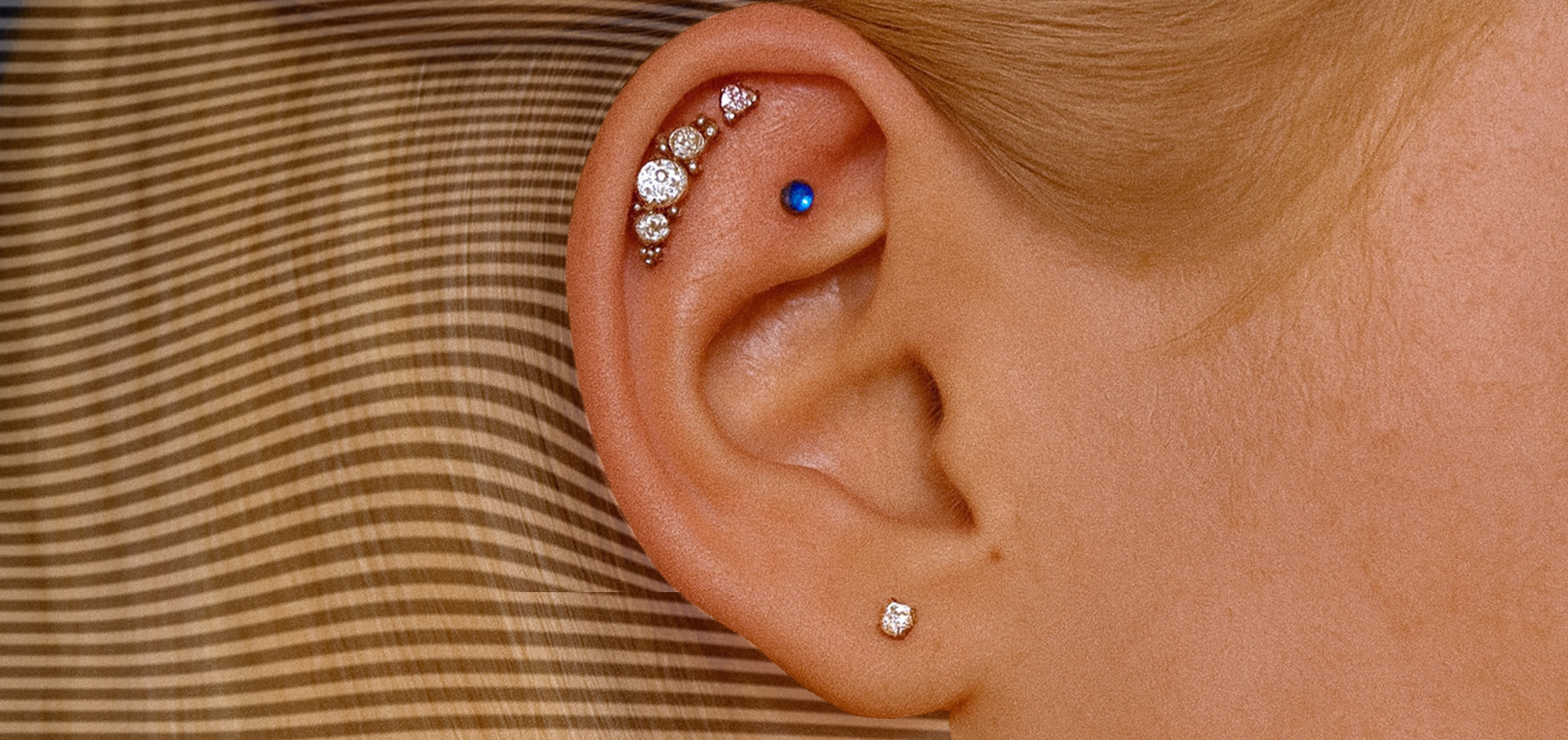
“Cartilage earrings” are made explicitly for piercings that go through the ear's firmer, less flexible parts, such as the helix, conch, tragus, rook, daith, and snug. These earrings are not just stylish; they’re designed to support proper healing and long-term wear.

Differences Between Cartilage Earrings and Regular Earrings
Cartilage Jewelry Is More Piercing-Specific
One of the most important things to understand about cartilage jewelry is that it’s highly piercing-specific. Unlike regular earrings, which consist of studs, hoops, and shepherd hook-backed earrings that can be used interchangeably in all earlobe piercings, cartilage piercings require specific jewelry types, especially for the initial piercing process.
Here are a few common cartilage piercing jewelry types:
- Flat-back labret studs: These consist of a post with a decorative front and a flat disc backing. They’re used as jewelry for the initial healing process in helix, tragus, conch, forward helix, and flat piercings.
- Curved barbells: As the name implies, a curved barbell is a barbell that is curved and has a bead on each end. You can choose fancier ends for the curved barbell, like ones with gem settings or stones. Curved barbells are great for initial rook piercing jewelry and snug piercings.
- Captive bead rings (CBRs): These are circular rings held closed by a tension-fitted bead. They are popular options for daith piercings and work well in healed tragus, helix, and outer conch piercings. They are also used for orbital piercings.
- Seamless Rings: Seamless rings are rings with no visible clasps. They’re opened and closed by twisting. They’re great for healed helix, daith, and conch piercings.
- Hinged segment rings/clickers: These are rings with hinged closures that click into place. They work well for daith piercings and healed conch and tragus piercings.
- Straight barbells: These are commonly used in industrial piercings. They’re also used as initial jewelry for helix piercings, conch piercings, flat piercings, and snug piercings.

Gauge Sizes
Another difference between regular earrings and cartilage earrings is the sizing. Typically, earlobe piercings are performed at 20 or 18 gauge, making them much thinner than cartilage piercings.
Cartilage piercings will vary in size depending on the piercing. Here are some cartilage piercings and the standard gauge size for them:
- Helix piercings: These are typically performed at a 16 gauge, though they may be pierced at an 18 gauge or 14 gauge. If you’re starting with a hoop, it may be pierced at a 14-gauge to add more stability to support the hoop.
- Tragus piercings: These are typically performed at a 16 gauge, though they can range from an 18 gauge all the way to a 14 gauge depending on your anatomy and the jewelry you want to wear. The larger the jewelry, the thicker the gauge size will be.
- Conch piercings: These are typically performed at a 16 or 14-gauge. If you’re initially pierced with a hoop, it may be performed at a 12 or 10-gauge.
- Rook piercing: These are typically performed at a 16 or 14-gauge.
- Snug piercing: These are typically performed at a 16 or 14-gauge depending on your anatomy.
As you’ll notice, most cartilage piercings range from 16 gauge to 14 gauge.

Jewelry Backings
One last difference between regular earrings and cartilage piercing jewelry is in the backings. It may seem like a small detail, but it is actually a pretty significant difference.
Most regular earrings designed for earlobe piercings come with one of the following back styles unless you purchase specific jewelry from a piercing shop:
- Butterfly backs (Friction backs): These are the most common type of regular earring backing. They slide onto the post and use tension via curled “wings” to stay in place. While easy to use, they can loosen over time and may irritate the skin if worn during sleep, which is why you’ll never see reputable cartilage piercing jewelry with a butterfly back.
- Screw backs: With screw back earrings, the earring post is threaded and the back twists on securely, similar to a nut and bolt.
- Plastic stoppers: These are popular in dangle and shepherd hook earrings. They are plastic backings that have holes in them for the wiring of the earring to go through and are larger than the gauge of the earring.

Cartilage piercings that require studs will always be flat-back posts. These help reduce the chances of hair or clothing getting caught or snagged on them.
No, They’re Not the Same
While cartilage earrings and regular earrings may appear similar at first glance, they serve very different purposes and are designed for distinct parts of the ear. From the gauge size and jewelry style to the backing mechanism, cartilage jewlery is made to support healing and comfort in firmer ear tissue, while regular earrings focus more on fashion aesthetics and ease for the earlobes. Choosing the correct type of jewelry for your specific piercing isn’t just about aesthetics; it’s essential for safety, healing, and long-term wearability. Whether you’re curating a full earstack or getting your first cartilage piercing, understanding the difference will help you make informed, stylish, and comfortable choices.