

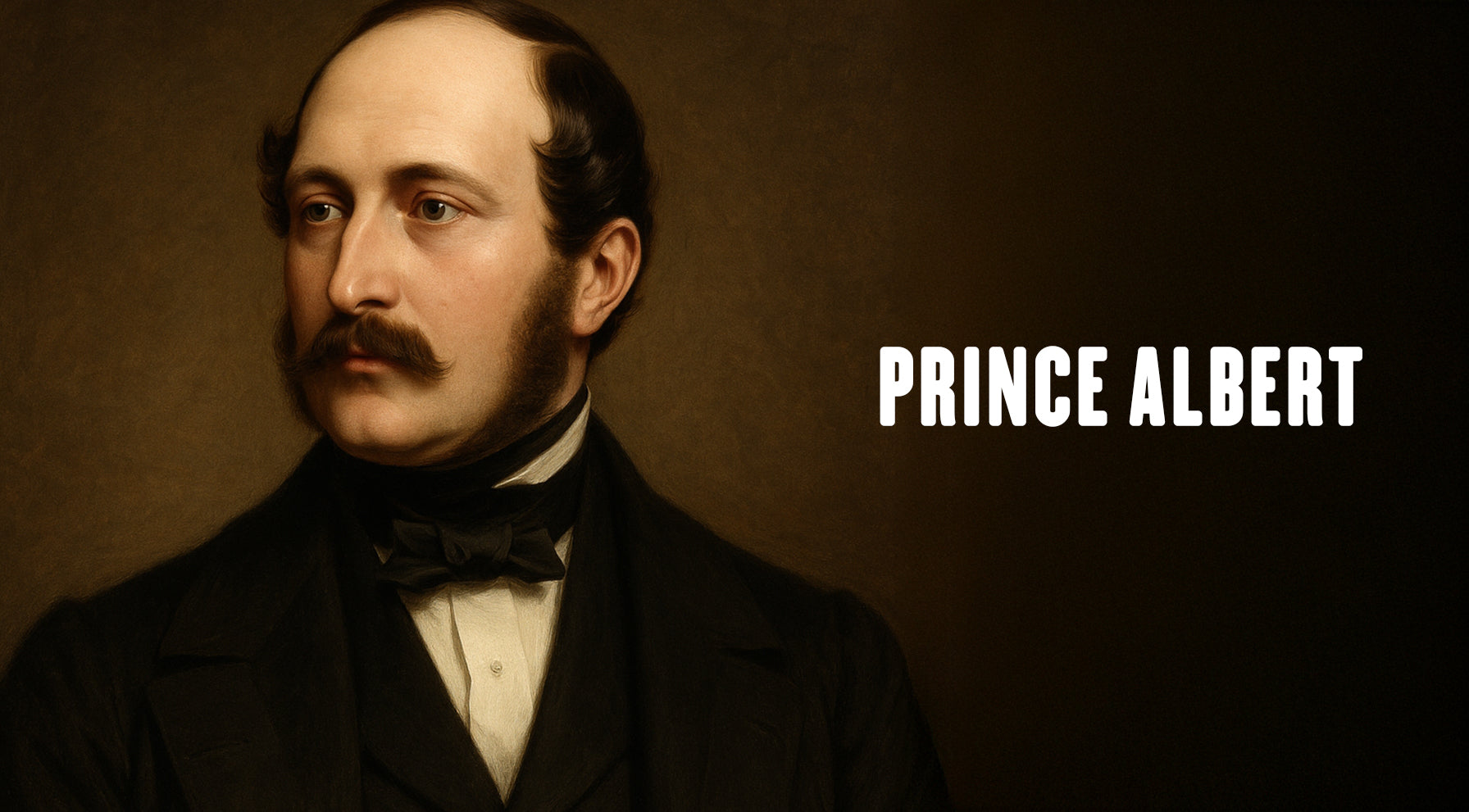
Why Is It Called a Prince Albert Piercing?
If you’ve ever wondered why one of the most intimate genital piercings is named after royalty, you’re not alone. The Prince Albert (or “PA”) piercing comes with a fascinating and controversial origin story that blends Victorian fashion, sexual subculture, and urban legend.
In this guide, we’ll explore just why it’s called a Prince Albert piercing, how much historical truth is behind the tale, and why the piercing still carries this royal title today.
Who Was Prince Albert?
Prince Albert of Saxe-Coburg and Gotha (1819-1861) was the husband and consort of Queen Victoria of the United Kingdom. Known for his strict moral code, refined taste, and influence on Victorian society, Albert was also a fashion-forward figure. His legacy includes modernizing the royal household, promoting the arts, and lending his name to a very personal and famous body modification.

The Urban Legend: A Royal Piercing for a Tighter Fit?
Now to the big question: why is it called Prince Albert?
The most widely circulated story is that Prince Albert had his penis pierced. According to legend, Albert had the piercing to help “tame” the appearance of his anatomy in tight-fitting trousers, which were all the rage in Victorian fashion. Supposedly, the ring was attached to a hook inside his pants to discreetly position the penis down one leg, helping him maintain a polished appearance in public.
While this theory certainly adds flair to the name, it lacks historical evidence. No documentation, letters, royal diaries, or biographies confirm that Prince Albert had such a piercing. Given the conservatism of the Victorian era, it’s extremely unlikely such a detail would have ever been publicly acknowledged, if it existed at all.
The Real Origin: Piercing Culture and Modern Myths
If the royal origin story is likely fiction, where did the name really come from?
The term “Prince Albert” became popularized in the 1970s and 1980s, during the emergency of modern Western body piercing and modification. This movement was spearheaded by figures such as Jim Ward, who founded Gauntlet, the first professional body piercing studio in the United States, and Doug Malloy, a wealthy enthusiast who helped codify many piercing names and placements.

In a pamphlet entitled “Body and Genital Piercing in Brief,” Doug Malloy circulated these fabricated origin stories as marketing ploys to give them a sense of exorcism, history, or erotic intrigue. The stories were designed to provide the subculture with a rich backstory and legitimize what was then a fringe practice. However, the marketing tactic worked.
The Appeal of the Name
Even if the royal connection is a myth, the name “Prince Albert” is undeniably memorable. It adds an air of sophistication, mischief, and curiosity that few other piercing names can match. Imagine if it were just called an “underside urethral ring.” Not as catchy, right?
The name also plays into themes of contrast: royalty versus rebellion, Victorian modesty versus modern sexual expression. These contractions make the Prince Albert piercing especially symbolic for many people. It’s not just about the jewelry; it’s about challenging norms, embracing one’s body, and rewriting tradition on your own terms.
The Prince Albert in Today’s Culture
Today, the Prince Albert is one of the most well-known and talked-about genital piercings. While it may not be as visible as an eyebrow ring or septum piercing, it carries a strong sense of identity and personal meaning for many who choose to get it.
Some individuals get a PA for sexual enhancement. The placement can increase stimulation for both the wearer and their partners. Others choose it as an act of self-expression, body ownership, or kink; in LGBTQ+ and BDSM communities, genital piercings like the PA may also carry specific or cultural significance.
Additionally, the popularity of the piercing has helped normalize discussions around genital piercings and body modification. What was once considered taboo or shocking is now part of mainstream conversations about body art, sexuality, and identity.
The Folkloric Origin
Why is it called a Prince Albert piercing? Due to exceptionally great marketing on Doug Malloy’s part. While the folkloric story makes for great trivia, there is no solid proof that it ever happened, nor is there evidence of other piercings of this kind for other members of Victorian society.


%20piercing%20comes%20with%20a%20fascinating%20and%20controversial%20orig...)