Article: Choosing Helix Earrings That Won't Snag
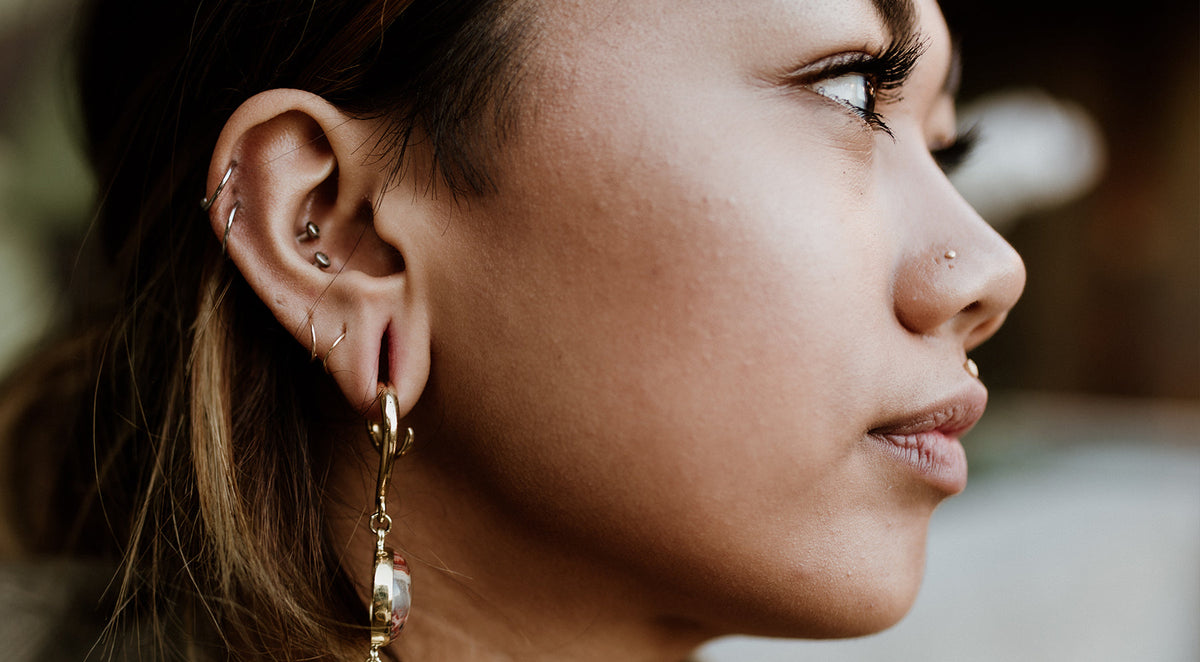
Choosing Helix Earrings That Won't Snag
A helix piercing is any piercing placed on the outer, upper rim of the ear's cartilage. It's one of the more versatile ear piercings. You can wear a single stud, or stack two or three together for a double or triple helix look.
The main drawback is that helix piercings are prone to catching on hair, clothing, bedding, and towels. Choosing the right jewelry reduces snagging significantly and helps protect the piercing during healing.
The best anti-snag jewelry types
Not all helix earrings are equally snag-resistant. Butterfly-back styles are common but tend to catch on hair, face masks, and fabric regularly. There are better options suited to this placement.

Flat-back studs, also known as labrets, are one of the most snag-friendly choices available. The back is a smooth, flat disc that sits flush against the skin with nothing protruding. Labrets come in threadless and internally threaded styles, both of which are comfortable for everyday wear.

Clickers are another reliable option. They use a hinge mechanism where the post clicks securely into the hoop, leaving no exposed wires or beads to catch on anything.
Choosing the right helix jewelry
Beyond style, there are four practical factors to consider when selecting helix earrings.
Gauge comes first. Cartilage piercings require a thicker post than standard lobe piercings. A 16G or 18G post is appropriate for most helix piercings.
Post length is the next consideration. Lengths typically range from 6mm (1/4") to 8mm (5/16"). Initial jewelry will be longer to accommodate swelling during healing. Once healed, downsizing to a shorter post reduces the chance of snagging.
Material matters as well. Implant-grade titanium or solid 14k or 18k gold are the recommended options. Avoid cheap metals and gold-filled or gold-plated jewelry, as the coating can flake and corrode over time, causing irritation.
Finally, pay attention to the front design. Gems should be bezel-set rather than prong-set, as prongs catch easily on fabric and hair. Low-profile options like flat discs or smooth balls are the safest choices. Avoid anything with sharp edges or protruding points.