Push-Back vs. Flat-Back Jewelry: What’s the Difference?
When you’re choosing body jewelry, the look is only part of the story. Comfort, security, and how your jewelry fits into your lifestyle matter just as much.
One detail that often gets overlooked is how the jewelry actually stays in place. That’s where the difference between push-back and flat-back jewelry really comes into play.
At first glance, they might not look that different, but once you wear them, you’ll see why piercers and body jewelry fans have strong opinions.
Let’s break down what each style is, how they work, and which one might be the better first for your piercings.
What Is Push-Back Jewelry?
If you’ve ever bought earrings from a mall kiosk or department store, chances are you’ve purchased push-back jewelry.
Push-back jewelry, also known as butterfly back jewelry, is the style most people think of when they picture a basic stud earring. It has a straight post and a small metal clutch that you push onto the back to hold it in place.

How It Works
You slide the post through your piercing and push the clutch onto the notches until it feels snug. Some push-back jewelry doesn’t come with notches, so you have to press the clutch flush to the back of your ear for it to feel secure.

Push-back jewelry is a familiar design that works well enough for standard lobe piercings; however, it falls short in terms of comfort, safety, and security for anything beyond that.
What Is Flat-Back Jewelry?
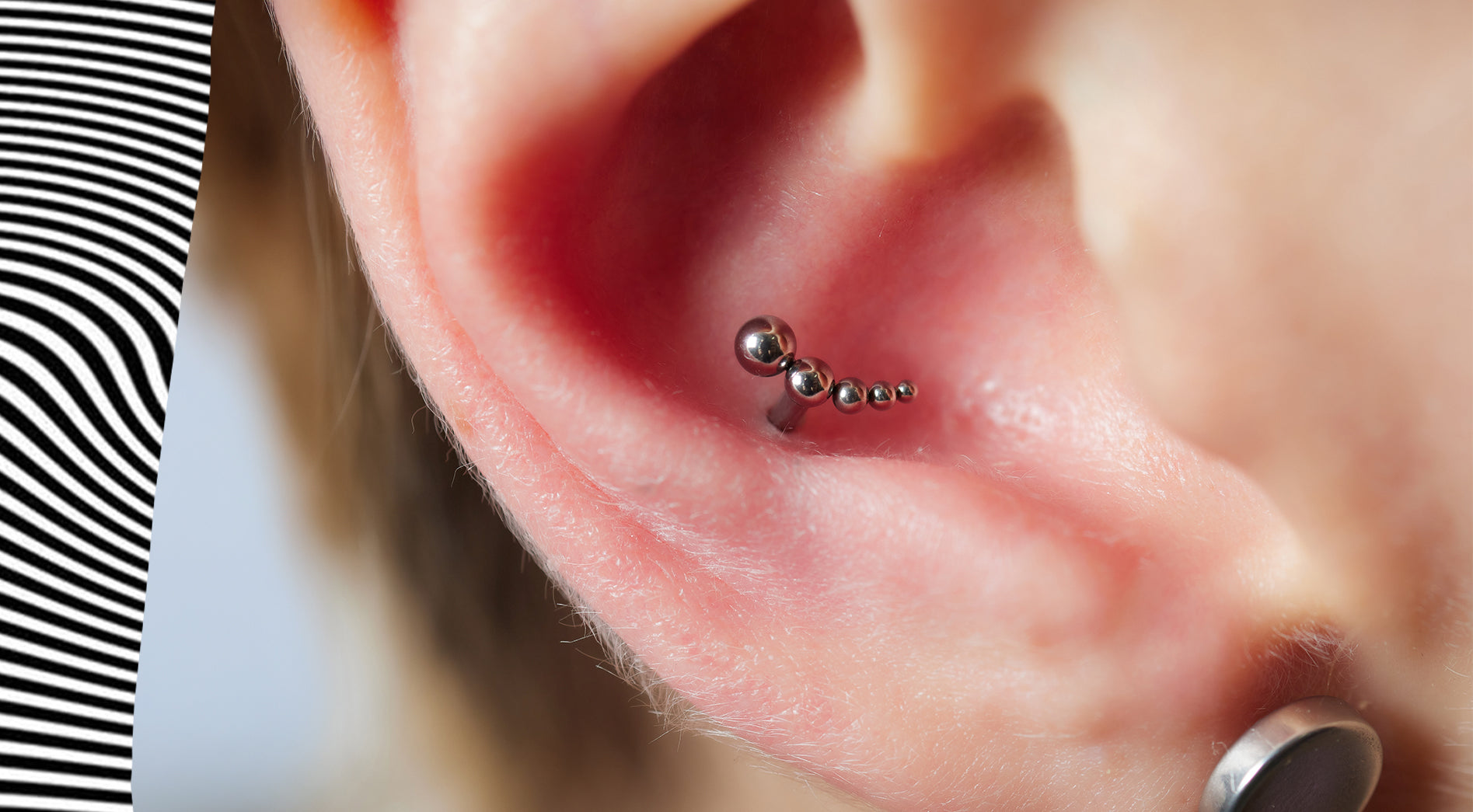
Flat-back jewelry, also known as labret studs, was designed with body piercings in mind. Instead of a clutch that squeezes onto the post, it uses a flat disc that rests smoothly against the skin. The front decorative piece attaches to the post with either a threadless push-fit or threaded connection.

How It Works
The post goes in from the back, the flat disc rests against your skin, and the decorative end locks into place from the front.

Key Differences Between Push-Back & Flat-Back Jewelry
Healing and Jewelry Quality
Push-back jewelry is not recommended for fresh piercings for the following reasons:
- Trapped debris and bacteria: If you’ve worn butterfly back earrings before, you may have removed them to find them coated in gunk or smell really badly. This is because they’re not easy to keep clean, as debris and bacteria accumulate easily.
- Compression and embedding: Fresh piercings will swell. Push-back jewelry backings sit too flush to the lobe and don’t allow enough room for swelling. This can cause irritation that’s quite painful or even the backing becoming embedded in the earlobe. Additionally, wearing the backing too tightly can even stretch or enlarge your piercing, causing the end to fit through the fistula of your piercing.
- Snagging: With push-back jewelry, the post still protrudes from the back, making it easier to snag and catch on your hair, clothes, glasses, and towels.
- Jewelry quality: Unless you’re buying from top luxury brands the quality of the material is likely not suitable for a fresh piercing. The low quality can lead to irritations, especially for those with nickel sensitivities, and it can even turn your earlobe green when the plating strips or chips.
Comfort
Flat-back jewelry is designed for all-day, everyday wear and tends to be much more comfortable than push-back jewelry.

With push-back jewelry, the post often protrudes past the clutch, meaning it can dig into your skin if you’re sleeping on your side, wearing headphones, or engaging in any activity that applies pressure to the area.
Additionally, the backing can dig into the skin of your lobe if it’s pressed tightly for a secure fit. This is especially the case for push-back jewelry without notches for the clutch to rest in.

On the other hand, the disc for flat-back jewelry rests comfortably against the skin of your lobe without digging into your neck or lobe skin.
Security
Push-back earrings rely on the clutch staying securely in place. However, over time, these clutches loosen, and the earrings can easily slip out when you least expect them to. Flat-back jewelry is much more secure. The threaded or push-fit locking mechanisms keep them in place, and they are meant for long-term, everyday wear.
Sizing
Not all ears are the same. Some people have thicker lobe tissue, while others have thinner lobe tissue. Push-back jewelry typically comes in one standard size, either 20 or 18 gauge, and one length. This is why they aren’t recommended for fresh piercings; there’s no extra room to allow for swelling.
Flat-back jewelry, on the other hand, comes in a variety of lengths and gauge sizes. Your piercer will be able to ensure a fit that works best for your ear’s anatomy and allows for swelling and healing.
Cost
You’ll find that push-back jewelry is often much cheaper and more affordable than flat-back jewelry. However, what you save in cost, you end up sacrificing in quality.
Flat-back earrings are designed for long-term wear and are the smarter investment. You’re paying for quality jewelry that’s made of body-safe materials, more secure jewelry so you don’t have to keep replacing your earrings, and jewelry that’s easier to keep clean. Hence, your piercings are happy and healthy.
Push-Back Jewelry vs. Flat-Back Jewelry: Which Is Right for You?
If you’re looking to invest in jewelry that’s comfortable, stylish, versatile, safe, and beneficial for healing from the start, opt for flat-back jewelry.

At Urban Body Jewelry, our collection features pieces crafted from titanium, gold, steel, and other premium materials. Whether you’re searching for minimalist studs or bold statement pieces, we’ve got everything you need to make your piercings look and feel their best.
PHOTO CRED: AGENLA ROMA