Scar Tissue and Keloids Around Belly Button Piercings and How to Manage Them
A belly button piercing can be a fun way to show off your style, but bumps, thickened skin, or irritation around the piercing can be frustrating. Scar tissue and keloids are not the same thing, so knowing the difference can help you decide what to do next.
Scar Tissue vs. Keloids
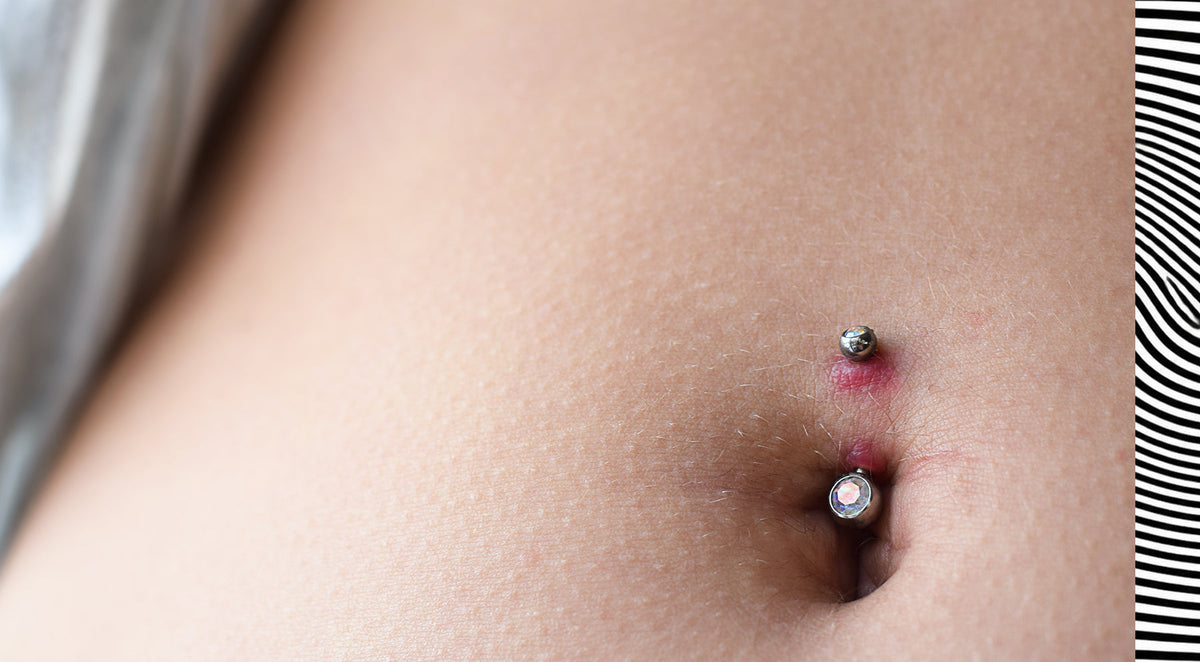
Scar tissue can form as part of the body’s response to irritation, pressure, or past trauma around a piercing. It may feel firm, raised, or slightly uneven near the piercing channel.
Keloids are different. They are raised areas of excess scar tissue that can grow beyond the original piercing site. Not every bump around a navel piercing is a keloid, which is why it is important not to self-diagnose based only on appearance.
If the area is growing, painful, changing quickly, or not improving, it is best to check in with a professional piercer or healthcare professional for guidance.
Why Bumps Can Happen Around Navel Piercings
A belly button piercing can take a long time to heal. Navel piercings commonly take several months to fully settle, and the timeline can vary depending on your body, aftercare habits, jewelry fit, and daily movement.
During that time, the piercing can be irritated by tight waistbands, snagging, movement, friction, sweat, or jewelry that does not fit correctly. Clothing can rub against the piercing or get caught on jewelry, so breathable, loose-fitting clothing is often easier to manage while the area is sensitive.

Start With Gentle Aftercare
The first step is to keep the area clean and avoid touching it unnecessarily. Wash your hands before touching the piercing, and clean the area gently with appropriate piercing aftercare products.
Avoid picking at crust, twisting the jewelry, or trying to force out a bump. Harsh products can also make irritation worse. If the bump is caused by friction or pressure, the solution may be less about cleaning more and more about removing the source of irritation.

Check Your Jewelry Fit
Jewelry fit can make a big difference. A barbell that is too short may press into the skin, while jewelry that is too long can move too much or catch on clothing.
Most belly button rings use a curved barbell style, and navel jewelry is commonly available in materials like stainless steel, titanium, 14kt gold, and other options depending on the style.
For a healing or sensitive piercing, simple jewelry is usually easier to manage than heavy dangles or oversized decorative pieces. Save more dramatic belly button rings for when the piercing is fully settled and can handle extra movement.
Reduce Friction and Snagging
Navel piercings are in a high-movement area, so irritation can build up from everyday habits. High-waisted pants, tight workout clothes, belts, towels, and sleeping positions can all put pressure on the piercing.
Try switching to softer, looser clothing while the area calms down. Be careful when drying off after a shower, changing clothes, or exercising. Sweat can also make the area feel more irritated, so keeping the piercing clean and dry after workouts can help.
Know When Not to Change Jewelry
It can be tempting to swap jewelry when a bump appears, but changing too soon can create more irritation. Belly button piercings can take several months to fully heal, and jewelry changes should usually wait until the area is no longer red, sore, swollen, crusty, or irritated.
If the jewelry seems to be the problem, visit a professional piercer instead of forcing a change at home. They can check the fit and suggest a better size or style.