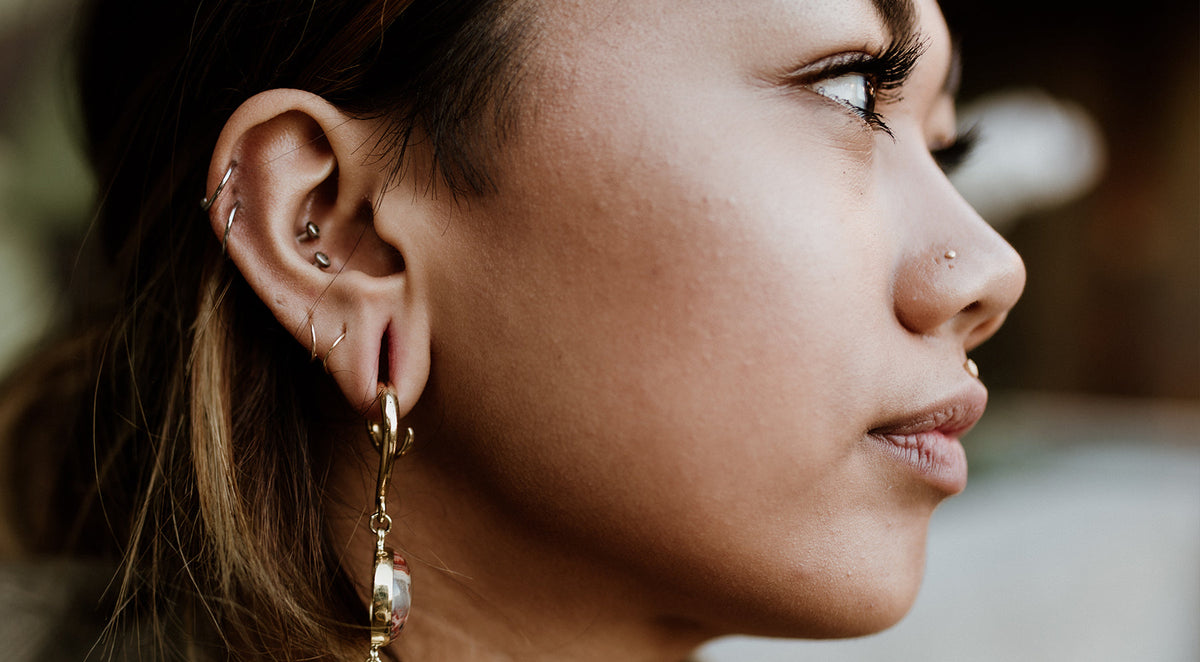
Article: What “Nickel-Free” and “Hypoallergenic” Means in Earrings

What “Nickel-Free” and “Hypoallergenic” Means in Earrings
If your ears get irritated easily, jewelry materials matter just as much as style. Terms like “nickel-free” and “hypoallergenic” can be helpful, but it is important to understand what they actually mean before choosing earrings, tragus jewelry, or cartilage pieces.
What Does Nickel-Free Mean?
Nickel-free means the jewelry is made without nickel, a metal that can bother some people with sensitive skin. Nickel is often found in certain lower-cost fashion jewelry and metal blends, so checking material details before buying is a smart step.

Materials like titanium, niobium, glass, and select gold jewelry are often popular choices for people who want jewelry that feels more comfortable for everyday wear. The right material can make a noticeable difference, especially if your piercings tend to react to cheaper metals.
What Does Hypoallergenic Mean?
Hypoallergenic usually means a piece is less likely to cause irritation for many wearers. It does not mean every person will react the same way, since everyone’s skin and piercings are different.
The material, finish, plating, and jewelry quality can all affect comfort. For example, a simple titanium flat back may feel better for daily wear than a coated earring that can wear down over time.

If you are shopping for conch earrings or other cartilage pieces, look beyond the word “hypoallergenic” and check the actual material. That gives you a better idea of what you are putting in your piercing.
Why Material Matters for Cartilage Jewelry
Cartilage piercings can be more sensitive to pressure and irritation than standard lobe piercings. That is why fit, material, and jewelry style are all important.
For tragus jewelry, low-profile styles can be especially useful because the piercing sits close to earbuds, hair, and the side of the face. A smooth flat back or small hoop can help keep the look clean without feeling bulky.
Conch jewelry may need even more attention to fit, since this piercing sits in a larger cartilage area and can be styled with studs, hoops, barbells, or captive bead rings depending on placement.
Nickel-Free Does Not Always Mean the Same Thing
Not all jewelry labels are equally specific. Some pieces may be labeled nickel-free because they do not intentionally include nickel, while others may be made from pure or highly controlled materials.
That is why product details matter. Look for clear material descriptions such as ASTM f-136 titanium, niobium, 14kt gold, glass, or ASTM f-138 stainless steel. If you know your ears are sensitive, avoid guessing based on color alone.
A gold-tone finish does not always mean the piece is solid gold. A silver-colored earring is not automatically titanium or stainless steel. Always check the listed material before buying.
Choosing Earrings for Sensitive Ears
Start with the piercing location. Lobes may tolerate a wider range of earrings, while cartilage piercings often need a better fit and smoother design.
For conch earrings, think about whether you want a stud, hoop, barbell, or captive bead ring. The best choice depends on your piercing placement, anatomy, and the look you want.
For daily wear, simple jewelry is usually easiest. Smooth surfaces, secure closures, and comfortable backing styles can make a big difference.

When to Switch Jewelry
If earrings feel itchy, tight, heavy, or uncomfortable, the material or fit may not be right for you. Do not force jewelry to work just because you like the style.
Try switching to a simpler piece in a material that is easier on your skin. If the piercing is new, irritated, or difficult to change, visit a professional piercer instead of swapping jewelry at home.